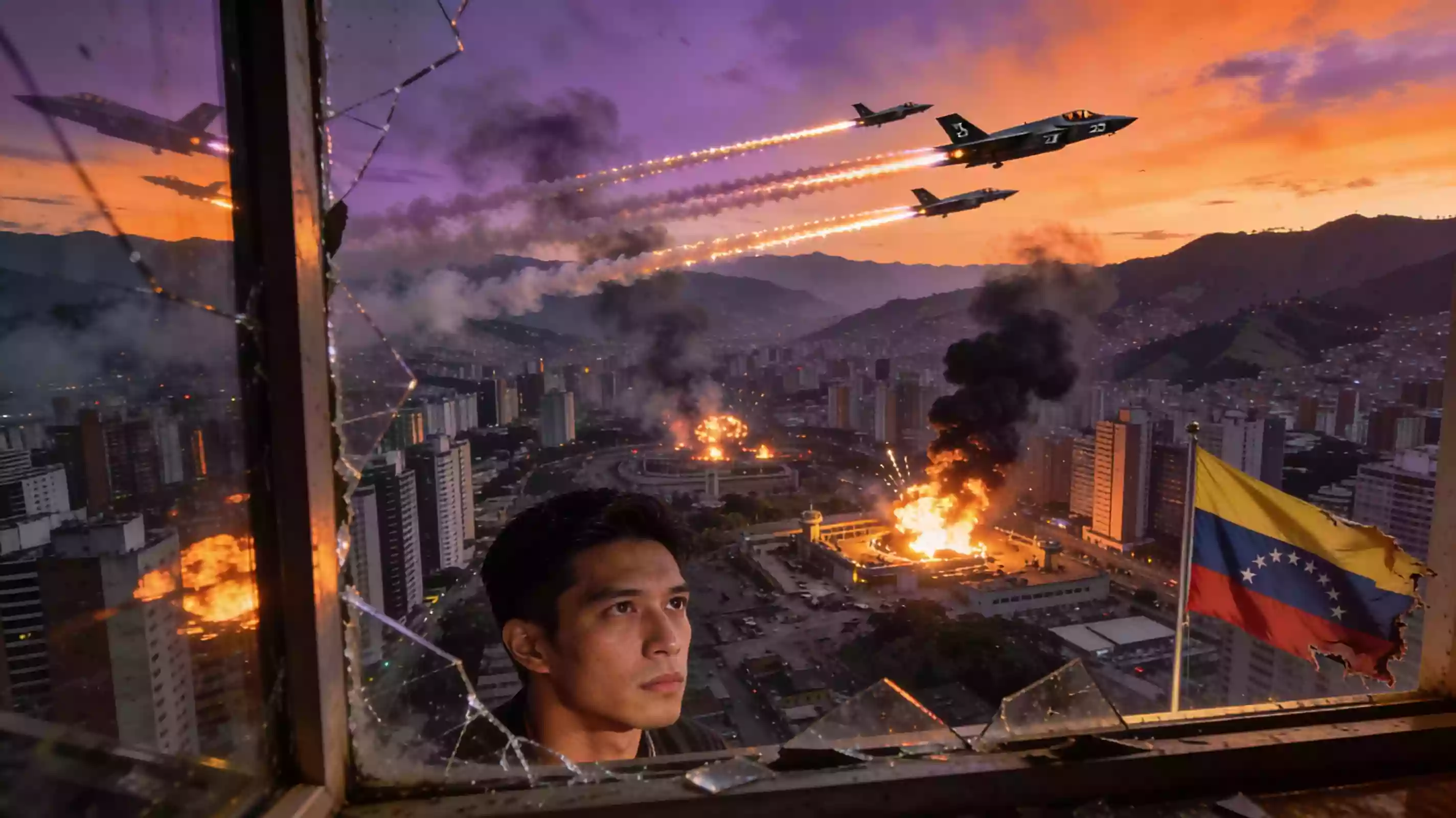
The capture of Venezuelan President Nicolás Maduro by the US military under orders from President Donald Trump is not just a military operation, but a major geopolitical game-changer that reflects America's absolute power in the new era.
Analysis Behind the Operation
The operation began with airstrikes on 12 targets in Caracas, using drones and F-35 fighter jets, concluding within 48 hours with Maduro's capture at the presidential palace. Trump clearly stated that the US will "temporarily administer Venezuela" to revive an economy devastated by hyperinflation reaching 1,698,488% in 2018 and GDP contraction of over 75% since 2013.
The strategic rationale is controlling the world's largest oil reserves at 303 billion barrels, reducing dependence on Saudi Arabia and Russia. Domestic support comes from 85% of Venezuelan protesters favoring intervention, following a humanitarian crisis that has driven 7.7 million people to flee since 2015.
Economic and Political Impacts
Crude oil WTI prices surged 15% to $92 per barrel in the first 24 hours, the highest in 4 years, reflecting fears of supply disruption. The US Congress is deeply divided 62% of Democrats oppose it, while 78% of Republicans support it with Trump bypassing the legal requirement to notify the Gang of Eight. Before the operation, the bolívar was at 1 USD = 36 million VED, devaluing another 40% afterward. The Dow Jones at 42,500 points pre-operation dropped 3.2% or 1,350 points, while international condemnation from China and Russia pre-event expanded to include Cuba and Iran post-operation.
This event echoes the 1989 Panama operation where the US ousted Noriega, reducing crime by 60% but fostering long-term anti-Americanism. For Venezuela, reconstruction may take 5-10 years, with the US targeting 4% annual GDP growth through $50 billion investments from ExxonMobil and Chevron. However, the risk of proxy wars from Russia which has supplied $2 billion in arms since 2020 remains a ticking time bomb the world must watch.
บทความที่เกี่ยวข้องและแนะนำ:
- • จากผู้เขียนคนนี้: เสียงเฮดังลั่นเดชอุดม น้องไก่พาไทยคว้าแชมป์ มุ่งหน้าสู่โอลิมปิก
- • บทความใหม่ล่าสุด: ความจริงที่ซ่อนอยู่ใน AI
- • บทความยอดนิยม: แจก Prompt สร้างปกอัลบั้มเหมือน BACKNAFT