5 Smartphones To Watch In 2026
2026 is shaping up to be a pivotal year for smartphones, with AI‑native features, smarter cameras, and more efficient batteries redefining what a “flagship” really means. While overall smartphone shipments are expected to grow only slightly, competition at the high end has never been more intense
Market snapshot in 2026
บทความที่เกี่ยวข้องและแนะนำ:
- 📂 ในหมวดเดียวกัน: วิธีแก้ปัญหาคลิป AI โดนปิดการมองเห็นบน YouTube ฉบับอัปเดตปี 2026
- ✍️ จากผู้เขียนคนนี้: กับดัก นายหน้าคอมมิชั่น Tiktok
- 🔗 บทความที่เกี่ยวข้อง: เทคโนโลยี AI กำลังเปลี่ยนโลก จาก AI รุ่นแรกไปจนถึง AI ระดับสูงสุด
- 🔗 อ่านต่อ: เทคโนโลยี AI สั่งการรถยนต์ไฟฟ้าไร้คนขับ ทำโลกเปลี่ยนไปอย่างไร?
- 🆕 มาใหม่: 10 หัวใจสำคัญของเนื้อเพลงฮิต
- 🔥 ยอดนิยม: เรวัช ซัด ฮุนเซน อย่าปลุกชาติจนลุกเป็นไฟ
The global smartphone market is finally recovering after several slow years, with shipments forecast around 1.25 billion units in 2025 and modest growth continuing into 2026. Samsung and Apple remain the two heavyweights, holding roughly 19% and 18% market share respectively, while brands like Xiaomi and Oppo fight aggressively on price‑to‑performance
Android still dominates with more than 70% global OS share, but iOS maintains a highly profitable premium segment and leads in some markets like the US. For buyers, this means more choice than ever in the upper‑midrange and flagship tiers, especially as AI and camera innovation move down to cheaper models
1. Samsung Galaxy S26 Ultra
Samsung’s Galaxy S series is expected to grab headlines again in early 2026, and the S26 Ultra is widely tipped to be one of the most influential Android phones of the year. Rumors point to slimmer design, a revamped camera housing, upgraded long‑range zoom, and better power efficiency, plus potential support for the new Qi2 wireless charging standard
For power users, the S26 Ultra will likely continue where the S25 left off: a large high‑brightness LTPO display, a top‑end Snapdragon 8‑series or Exynos 2600 chipset (depending on region), and multi‑day battery life optimizations. With Samsung leading global shipments at around 19% market share, this model will help set the benchmark for what other Android flagships must beat in 2026
2. Apple iPhone 18 Pro
On the iOS side, the iPhone 18 family is expected to be one of the most anticipated launches of late 2026. Analysts expect Apple to double down on on‑device generative AI, tighter integration between the A‑series chip and iOS, and more advanced computational photography
Apple’s premium phones already help drive overall market growth, with iPhone shipments projected to rise faster than the Android average through 2025. If Apple delivers deeper AI features and longer software support, the iPhone 18 Pro could remain the default choice for creators and professionals who value ecosystem, security, and resale value over raw specs
3. OnePlus 14
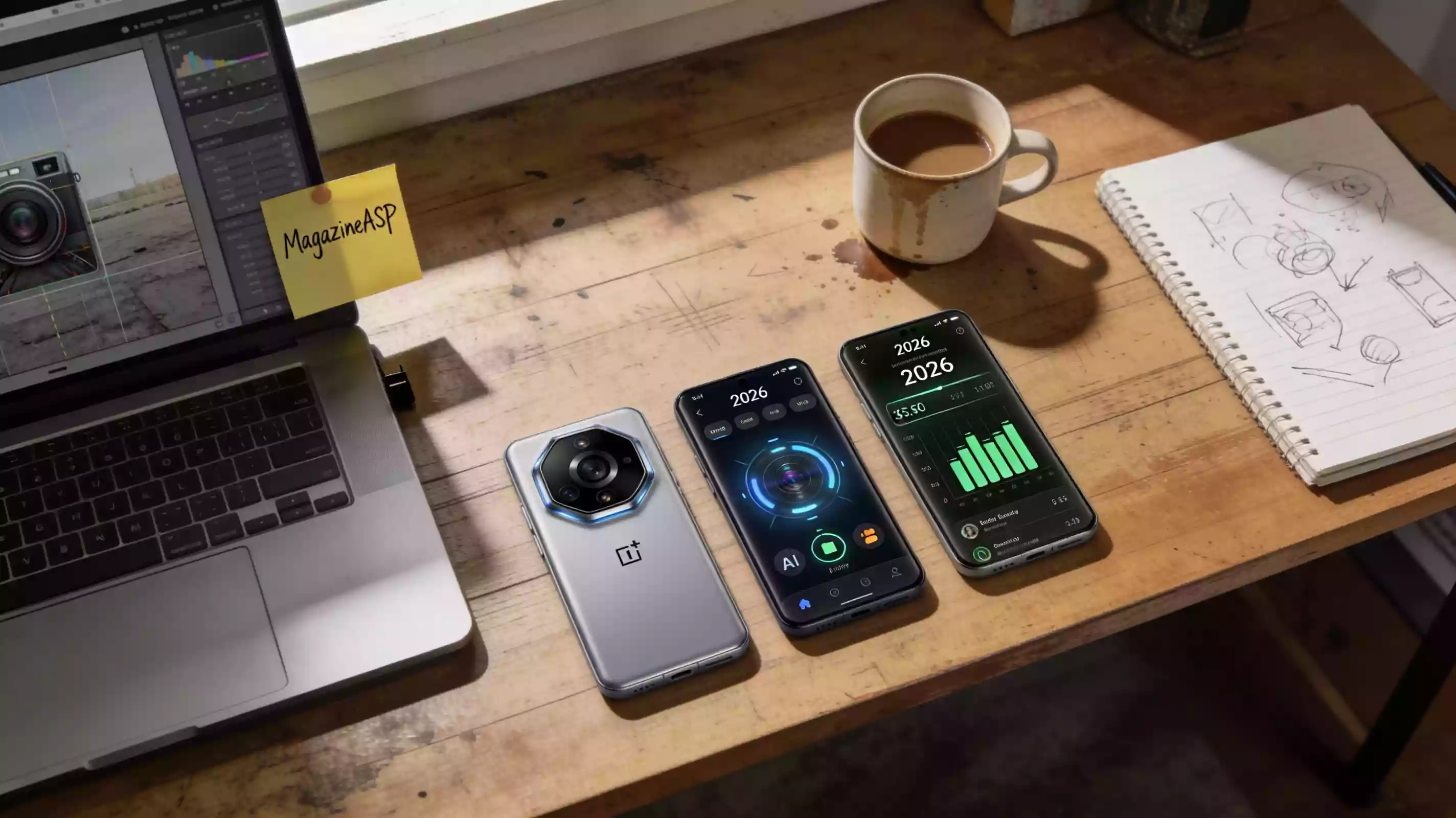
OnePlus has been steadily climbing back into the spotlight by offering near‑flagship hardware at slightly lower prices, and the upcoming OnePlus 14 is expected to continue that strategy. The current OnePlus 13 is already praised for delivering Snapdragon 8 Elite‑level performance, large RAM options, and strong battery life at around 100–400 USD less than some rivals
If OnePlus follows the same formula flagship chip, fast charging, bright 120 Hz display, and refined software the OnePlus 14 could become the sweet‑spot recommendation for users who want top performance without paying Samsung or Apple prices. In a market growing only about 1–1.5% per year, this value‑flagship segment is where brands can win share quickly
4. Xiaomi 17 Pro / 17 Ultra
Xiaomi is known for pushing aggressive specifications, and its 2026 flagship line is expected to focus heavily on camera and battery technology. Leaks around the Xiaomi 17 series mention Snapdragon 8 Elite‑class processors, high‑capacity batteries close to or above 7000 mAh, and ultra‑fast wired charging around 100 W paired with fast wireless charging
The brand has already carved out a strong position in camera‑centric phones, and the 17 Pro/Ultra are likely to pursue that niche with multi‑lens 50 MP setups and dedicated AI processing for low‑light and portrait shots. With Xiaomi holding about 10% global vendor share, these models will be especially interesting in markets where price sensitivity is high but users still want cutting‑edge photography
5. Oppo Find X9 Ultra / Foldables
Oppo’s Find X series has become a showcase for experimental design and camera systems, and the upcoming Find X9 Ultra is rumored to bring variable‑aperture cameras, a QHD+ LTPO display, and 100 W fast charging. This combination targets photography enthusiasts who also care about fast charging and premium design
Alongside traditional slabs, 2026 will also see more mature foldables such as Samsung’s Galaxy Z Flip and Fold series, which are expected to share the same high‑end processors as the S26 line while refining durability and hinge design. Foldables may still be a small percentage of total shipments, but they are growing faster than the overall market and act as a technology halo for their brands
Trend analysis and what it means for buyers
Several key trends stand out when looking across these five devices and the wider 2026 lineup
AI‑native experiences: From camera processing to voice‑driven “agent” features, AI is moving from a marketing term to a core part of the user experience. Expect more on‑device models that work offline and personalize the phone around your habits
Battery and charging: Silicon‑carbon batteries, higher capacities, and 60–100 W fast charging are becoming more common in upper‑midrange and flagship phones, reducing “battery anxiety” for heavy users
Camera innovation: Multi‑sensor setups, variable apertures, and periscope zoom lenses are now standard on top models, with even midrange phones getting excellent daylight performance
Market maturity: With global shipments growing only around 1–1.5% annually, brands compete more on experience, software longevity, and ecosystem than on raw hardware alone
For most users in 2026, the smartest strategy is to balance three things: performance (chipset and RAM), battery life (capacity and charging), and software support (updates and AI features). Midrange models now easily cover gaming, social media, and content creation, so paying flagship prices only makes sense if you fully use the extra camera, display, and productivity features
The “best” phone in 2026 will depend less on raw specs and more on how well the device fits your lifestyle whether that is Samsung’s all‑round power, Apple’s tightly integrated ecosystem, OnePlus’s value‑driven flagships, Xiaomi’s camera‑first approach, or Oppo’s experimental designs. In a market that is growing slowly but innovating fast, taking time to match your usage patterns with the right brand and model will matter more than ever.









.webp)